> For the complete documentation index, see [llms.txt](https://docs.messageflow.com/llms.txt). Markdown versions of documentation pages are available by appending `.md` to page URLs; this page is available as [Markdown](https://docs.messageflow.com/sms/sms-campaigns/dasboard.md).

# Dasboard

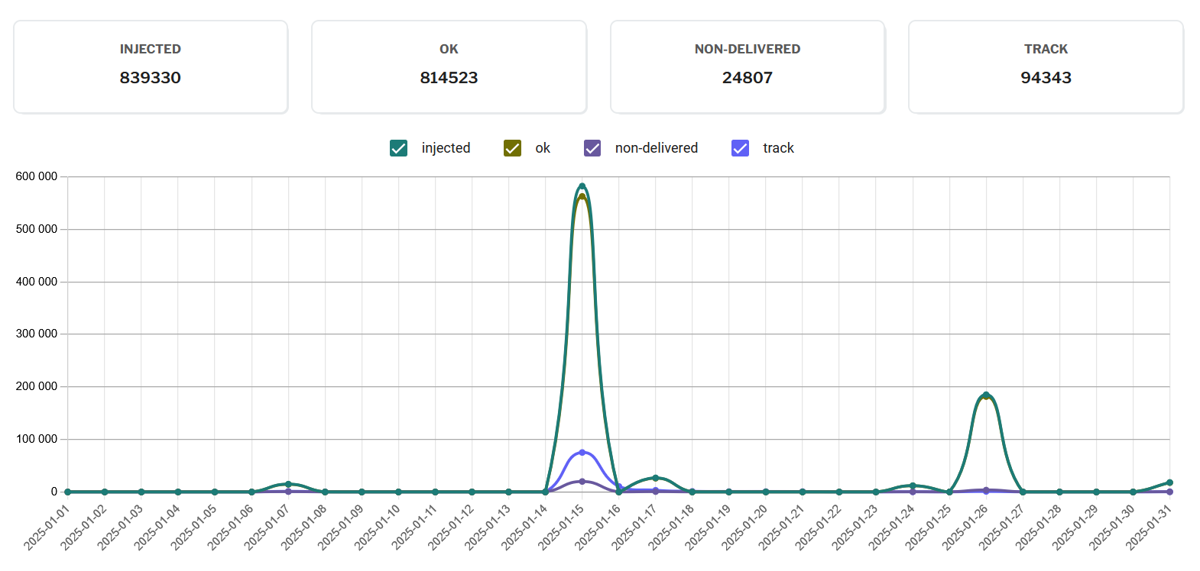
The SMS **Dashboard** is displayed as follows and provides a summary of the latest sends from the selected time range.

<figure><img src="/files/NCXWeByKxjL466suRlnj" alt=""><figcaption></figcaption></figure>

* **Select range** – select the date range for analyzing the SMS campaigns during the chosen period.
* **Select SMS headers** – allows you to select campaigns by specific headers.
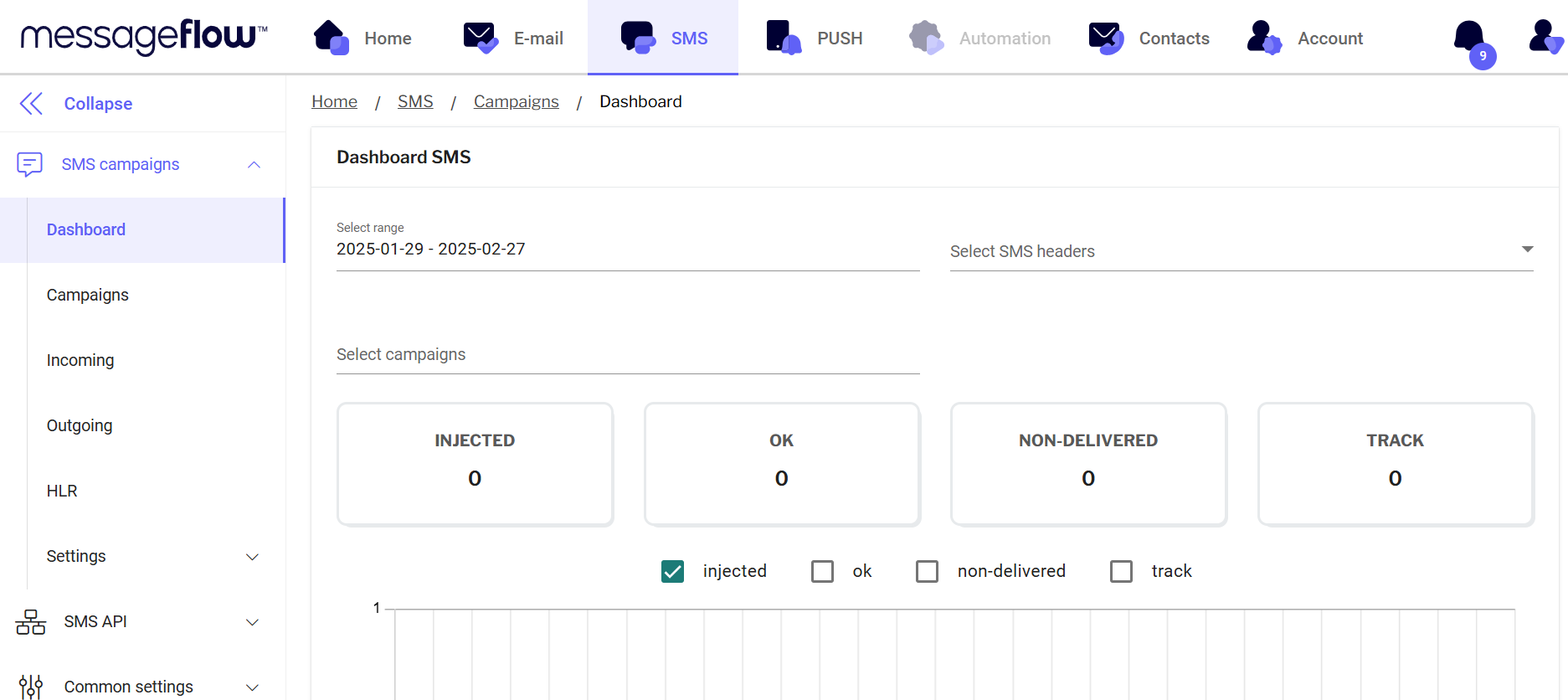
* **Select campaigns** – select the campaigns to analyze. After clicking "**Select campaigns**," an additional window will appear where you can check the recently sent SMS campaigns that you are interested in. You can also type their names to search for them.

<figure><img src="/files/GmtdlRQSQpMftol0PIDy" alt=""><figcaption></figcaption></figure>

* **Statuses of sent messages** – in the dashboard view, you have access to a summary of the campaign statuses.
  * **Injected** – messages accepted in the MessageFlow panel.
  * **OK** – messages successfully delivered to the recipient.
  * **Non-delivered** – messages that were not delivered.
  * **Track** – tracked messages (e.g., due to clicks on links).

<figure><img src="/files/BEqm5IFXGjb5LSsB6bMM" alt=""><figcaption></figcaption></figure>

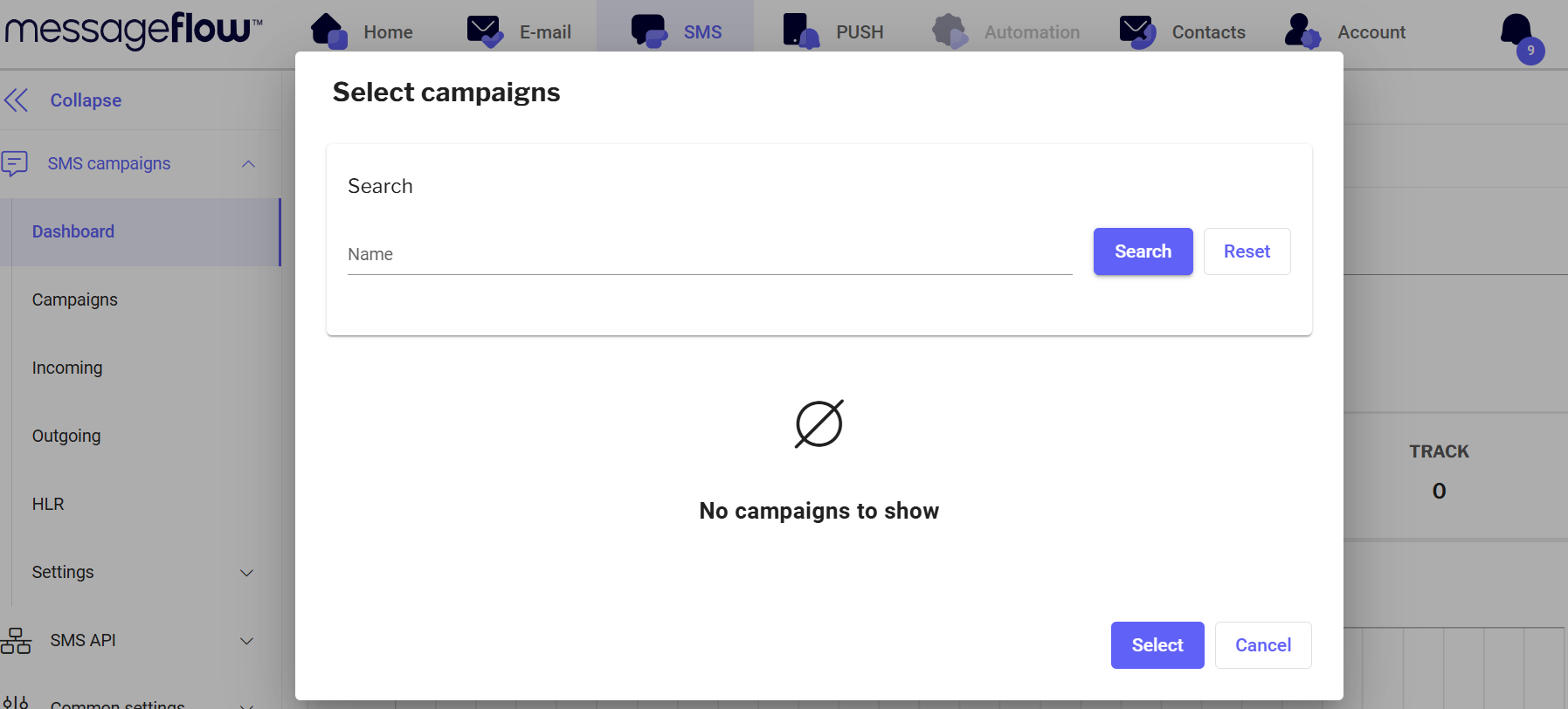
* **Chart** – shows the linear distribution of messages over time. Using checkboxes, you can select the statuses **injected, ok, non-delivered,** and **track** to see the dates when campaigns were conducted, how many messages were accepted in the panel, and how many were successfully delivered to the recipient.
<figure><img src="/files/YgI792mPJcQAvXlOYP64" alt=""><figcaption></figcaption></figure>


---

# Agent Instructions
This documentation is published with GitBook. GitBook is the documentation platform designed so that both humans and AI agents can read, navigate, and reason over technical content effectively. Learn more at gitbook.com.

## Querying This Documentation
If you need additional information that is not directly available in this page, you can query the documentation dynamically by asking a question.

Perform an HTTP GET request on the current page URL with the `ask` query parameter, and the optional `goal` query parameter:

```
GET https://docs.messageflow.com/sms/sms-campaigns/dasboard.md?ask=<question>&goal=<endgoal>
```

`ask` is the immediate question: it should be specific, self-contained, and written in natural language.
`goal` is optional and describes the broader end goal you are ultimately trying to accomplish on behalf of the user. GitBook uses it to tailor the answer towards what is most useful for that goal.

The response will contain a direct answer to the question and relevant excerpts and sources from the documentation.

Use this mechanism when the answer is not explicitly present in the current page, you need clarification or additional context, or you want to retrieve related documentation sections.